

Growing number of House GOP members leave due to worsening gridlock
- Last update: 50 minutes ago
- 3 min read
- 429 Views
- POLITICS
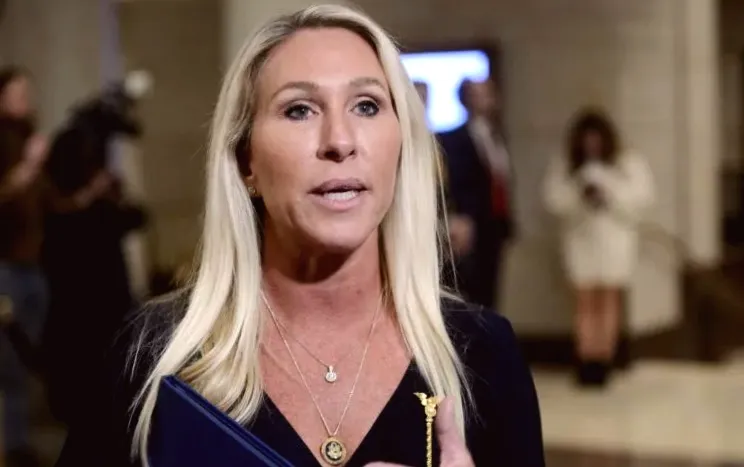
The Republican ranks in the House are experiencing a notable outflow. Over two dozen GOP members have already declared they will leave their positions at the end of their terms, with more expected to follow as lawmakers travel home for the holidays. This trend complicates the partys efforts to defend its narrow majority and counter Democratic gains in upcoming elections.
While retirements typically spike for the presidents party during midterm elections, the current pace could mirror the losses Republicans faced in 2018. Leadership now faces the challenge of maintaining party cohesion while protecting former President Trump from a Democratic-controlled House in the final years of his administration.
Representative Marjorie Taylor Greene (R-Ga.) announced she will resign on January 5, citing dissatisfaction with her party's approach to healthcare, foreign policy, and other issues. Greenes departure reflects a broader movement: so far, 23 Republicans are retiring or seeking other offices, and four have resigned. By contrast, 17 Democrats are pursuing similar paths.
The wave of exits spans the GOP spectrum, from high-profile conservatives like Texas Representatives Chip Roy, Jodey Arrington, and Michael McCaul to moderates such as Don Bacon (Neb.), who has repeatedly succeeded in competitive districts. During the 2018 midterms, 20 House Republicans had announced they would not seek reelection, and six resigned midtermfigures comparable to today.
Ultimately, the number of retirements we see among Republicans may end up similar to 2018, said Erin Covey, House editor at the nonpartisan Cook Political Report.
Several lawmakers expressed that the departures were not unexpected. Representative Brian Mast (R-Fla.) noted that midterm cycles often see members step aside after multiple terms, citing exhaustion from campaign pressures and seeking more fulfilling pursuits. Bacon echoed this sentiment, emphasizing that a lack of motivation to compete is a signal its time to move on.
Frustrations with leadership and congressional gridlock have also prompted resignations. Greene highlighted that political stalemates leave citizens concerns unaddressed, while Representative Thomas Massie (R-Ky.) criticized the party for limiting members to following leadership directives rather than acting independently.
Massie, known for clashing with Trump, most recently succeeded in passing legislation on Justice Department transparency regarding Jeffrey Epstein. Representative Kevin Kiley (R-Calif.) described ongoing dysfunction in Congress, pointing to prolonged shutdowns, disputes over authority on tariffs, and contentious redistricting battles as contributing factors.
Republicans acknowledge the demands of the role can be isolating. Representative Ronny Jackson (R-Texas) noted that many colleagues are leaving to prioritize family time. The impact on the 2026 midterms remains uncertain, with most departing members representing safely Republican districts, though some seats are competitive or leaning Democrat.
Redistricting battles continue to add pressure, but some see the turnover as an opportunity for new voices to emerge. Representative Randy Fine (R-Fla.) called the wave of departures fresh blood that could bring renewed energy to Congress, noting that decades-long tenure may not always serve the institution well.
Author: Olivia Parker
Share

Hegseth justifies attacks on suspected cartel boats, states Trump has authority to use force 'as he deems necessary'
6 minutes ago 2 min read POLITICS

National Park Service eliminates free admission on MLK Day and Juneteenth, includes Trump's birthday in new policy
9 minutes ago 2 min read POLITICS

Richard Padzur to depart FDA after recent CDER leadership change
12 minutes ago 2 min read POLITICS

Report: Golf Partner Convinced Trump to Pardon Client During 18 Holes
12 minutes ago 2 min read POLITICS

Democrats increase examination of super PACs as part of analysis of 2024 election
20 minutes ago 3 min read POLITICS

Trump Continues to Discuss Fictional FIFA Award
23 minutes ago 2 min read POLITICS

Rand Paul accuses Pete Hegseth of being either 'incompetent' or 'lying' about Venezuela strike
44 minutes ago 3 min read POLITICS

Thune prevents Johnson from advancing Georgia sanctions bill
45 minutes ago 3 min read POLITICS

Pete Buttigieg backs Angie Craig in Minnesota Democrats' Senate primary
49 minutes ago 2 min read POLITICS

Growing number of House GOP members leave due to worsening gridlock
50 minutes ago 3 min read POLITICS