
What do you hear when a chimp screams?
- Last update: 6 hours ago
- 2 min read
- 167 Views
- WORLD
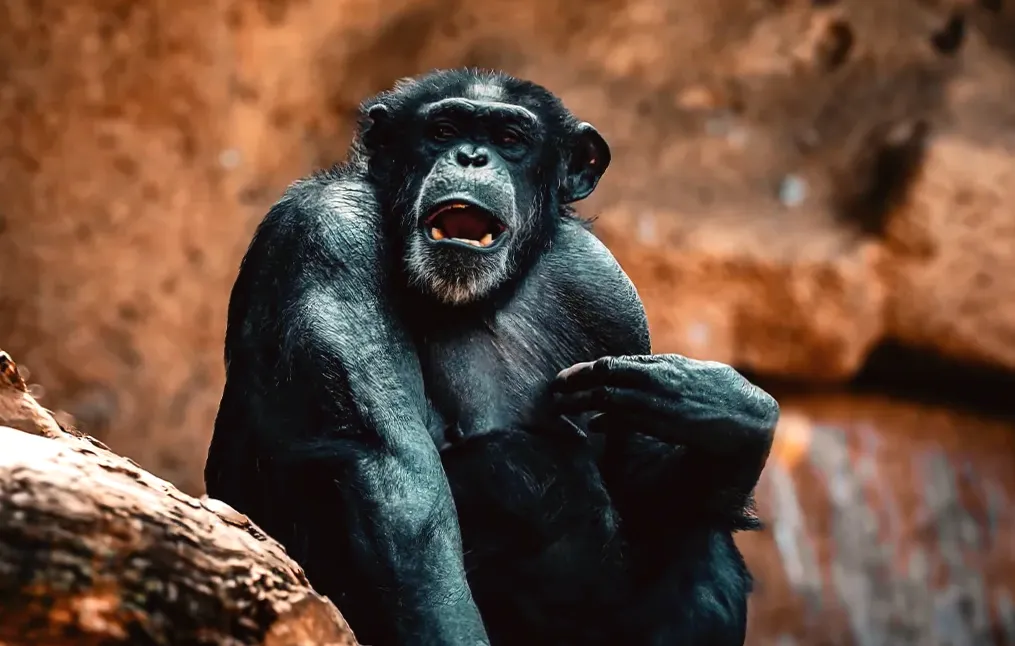
When a chimpanzee shouts from the treetops, what does your brain perceive? According to a new study from the University of Geneva, hearing a chimps call can activate an ancient form of recognition in humans, occurring below the level of conscious thought.
Researchers discovered that chimp vocalizations trigger activity in a voice-sensitive area of the human brain called the temporal voice area (TVA), previously believed to respond only to human voices. This suggests that some voice recognition abilities may be shared across species and existed long before human language emerged.
The brain response to chimpanzee calls was distinct from responses to bonobos or macaques, said neuroscientist Leonardo Ceravolo, one of the studys authors.
For the study, scientists collected vocalizations from four primate species: humans, chimpanzees, bonobos, and rhesus macaques. They recorded 18 different calls from each species and played them randomly to 23 human volunteers. Participants were asked to identify which species made each sound while their brain activity was monitored via MRI. Statistical analyses were used to compare the acoustic characteristics of the calls.
The results showed that the TVA lit up most strongly in response to chimp calls, more so than for the other non-human primates. Positive social calls from chimps also shared acoustic similarities with human positive vocalizations, a pattern not observed with bonobos. This aligns with previous studies indicating that bonobo communication evolved differently, despite bonobos being genetically as close to humans as chimps are.
The recorded vocalizations included single calls and sequences, ranging from threat and distress calls to friendly social sounds. Chimp recordings were captured in Ugandas Budongo Forest, bonobos in the Salonga National Park in the Democratic Republic of Congo, and rhesus macaques from semi-free monkeys in Cayo Santiago, Puerto Rico.
While past studies have examined human responses to primate and even cat sounds, this research is the first to reveal a specific cross-species activation in the human TVA. Future investigations may focus on the acoustic features that make chimp calls uniquely recognizable.
We knew certain brain regions in animals respond to conspecific voices, Ceravolo explained. Now we see that the human anterior superior temporal gyrus is also sensitive to non-human calls, suggesting the call of the wild remains embedded in our brains.
Author: Jackson Miller